Fort Monroe Forward: A Community Gathering to Launch the Next Chapter
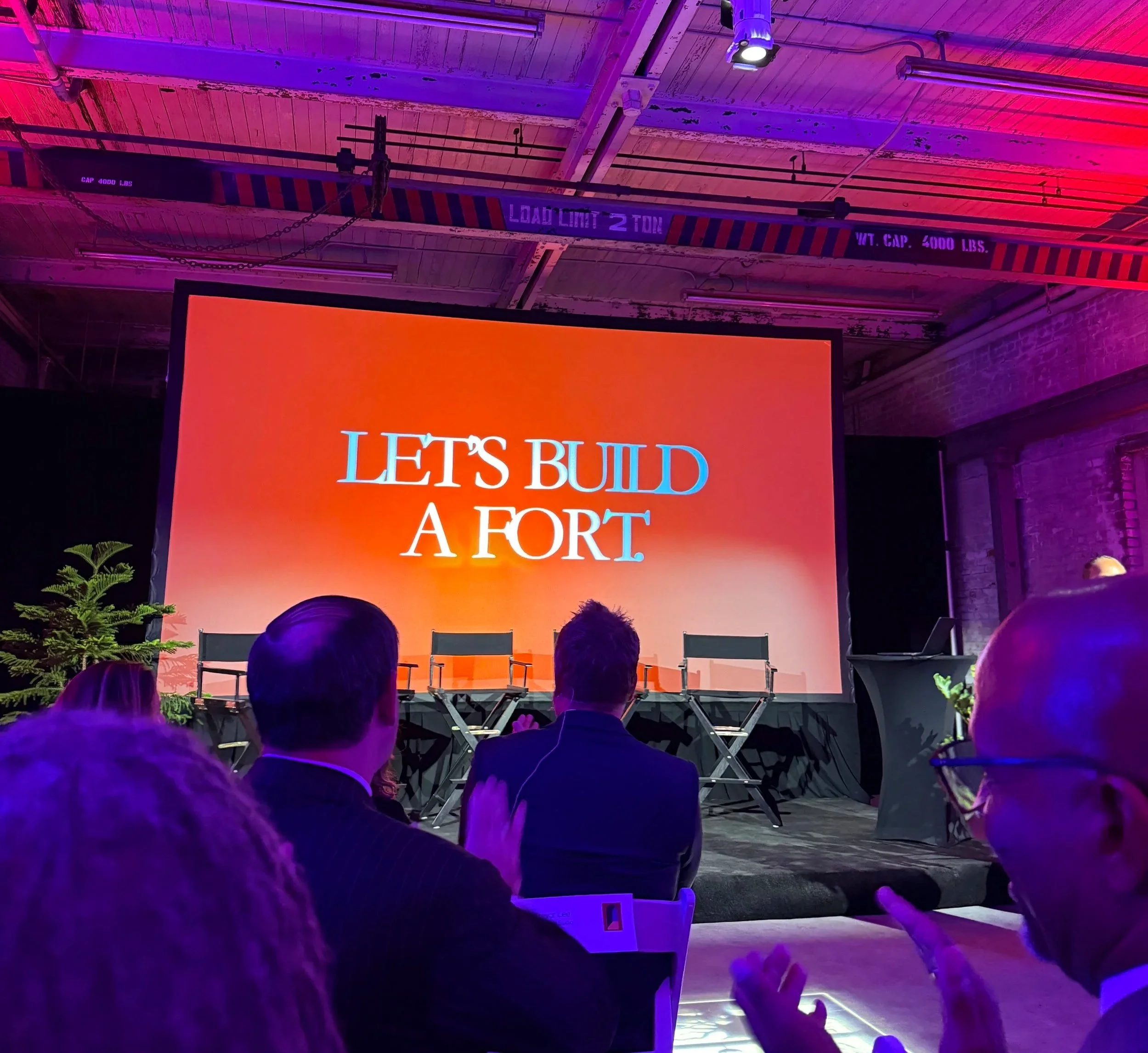
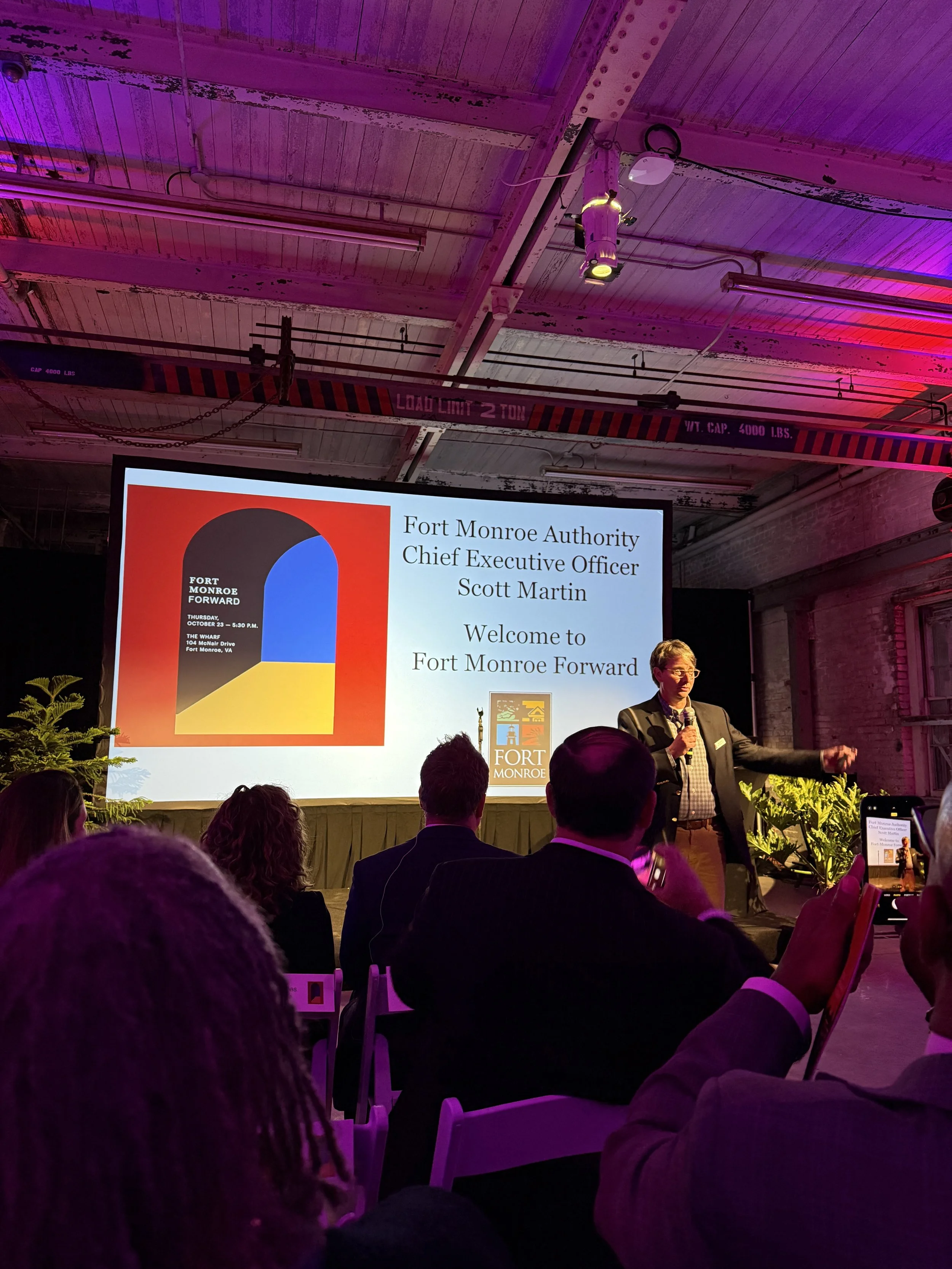
Last week, Fort Monroe hosted Fort Monroe Forward, an evening designed to mark a pivotal moment in the site’s future: the public launch of the Landscape Action Plan (LAP). The goal of the event was simple but significant: to bring the community into the process early, introduce the nationally recognized firms guiding the work, and signal that Fort Monroe’s next decade will be shaped with intention.
The setting itself told part of the story. The event was held at the historic Mine Planter’s Wharf, a waterfront structure that once supported military operations and now stands as a compelling example of adaptive reuse potential. Surrounded by the Chesapeake Bay and framed by the fort’s layered architecture, the wharf underscored the central question of the LAP: how can historic assets like this be thoughtfully reactivated for modern civic life while preserving their character?
Presentation from World-Class Firms
At the heart of the evening were presentations from the four finalist firms selected through a rigorous juried process: Hargreaves Jones, Field Operations, OLIN, and West 8 — each responsible for some of the most influential public landscapes in the world.
Hargreaves Jones is known for projects such as Louisville Waterfront Park in Kentucky, a nationally celebrated riverfront transformation, and Hudson Yards Public Square and Gardens in New York City. Their work often reclaims complex waterfronts and urban districts, blending ecological performance with civic life.
Field Operations is internationally recognized for The High Line in New York City, the adaptive reuse of an elevated rail line into one of the most visited public spaces in the world. They also led the design of Freshkills Park on Staten Island, one of the largest park reclamation projects in the United States, transforming a former landfill into a future 2,200-acre public landscape.
OLIN brings a long legacy of iconic civic spaces, including Bryant Park’s redesign in New York City and the landscape for the Washington Monument grounds in Washington, D.C. Their portfolio demonstrates an ability to shape landscapes that feel both timeless and highly functional.
West 8, a global leader in waterfront and climate-adaptive design, is known for Governors Island Park in New York Harbor and the Miami Beach Soundscape Park adjacent to the New World Center. Their projects often combine bold design with resilient infrastructure and strong public programming.
The presentations highlighted past projects — major waterfront transformations, adaptive reuse districts, and nationally recognized civic parks — demonstrating the caliber of thinking now being applied to Fort Monroe. These are firms accustomed to working at scale, navigating complex regulatory environments, and delivering places that endure.
Looking Ahead to a Collaborative Future
Fort Monroe Forward was a signal of transparency and momentum to launch a major planning project at Fort Monroe. And as the sun set over the Chesapeake and conversations lingered on the wharf, the message was clear: Fort Monroe’s future will not be accidental. It will be deliberate, collaborative, and rooted in both history and possibility.