A New Milestone for the African Landing Memorial at Fort Monroe
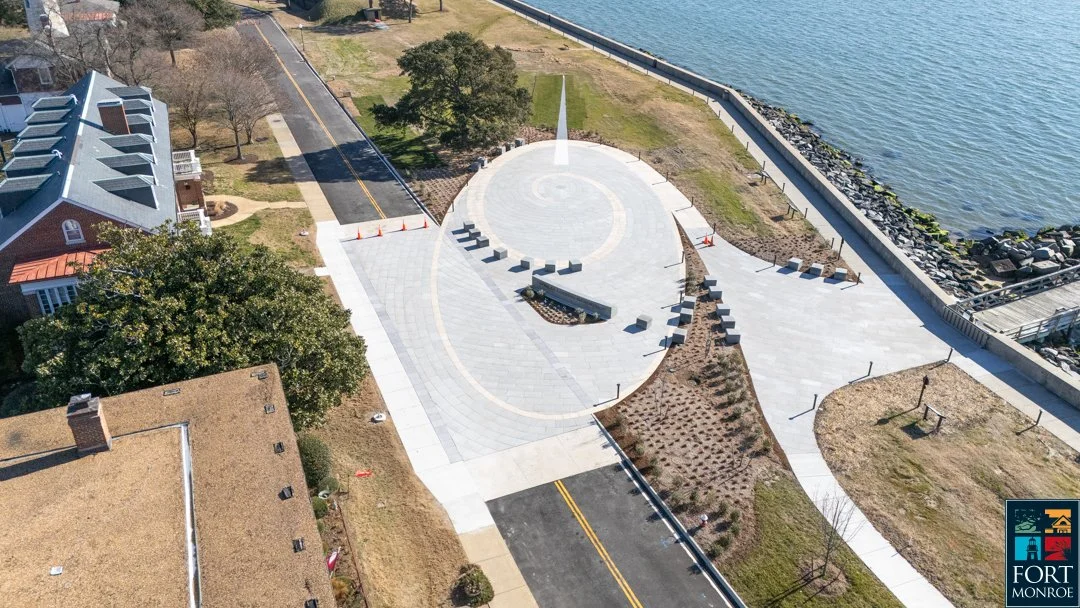
Fort Monroe has reached a significant milestone with the completion of the African Landing Memorial Plaza, a place of deep remembrance and reflection marking the arrival of the first enslaved Africans in English-speaking North America at Point Comfort in August 1619. This historic event where around “20 and odd”African men, women, and children were brought ashore forever shaped the course of American history.
The African Landing Memorial is designed to interpret this history with care and depth, portraying the journey from Africa, experiences through the Middle Passage, and the lives that followed in early Virginia. The overall memorial will feature multiple sculptural elements — including reliefs, figures, and symbolic forms — oriented in view of Angola to acknowledge the ancestral origins of those first brought here.
The plaza’s completion caps the first visible phase of a multi-year memorial project, with additional elements slated for installation annually over the next three years. This phased approach allows the memorial to grow in meaning and presence, offering evolving opportunities for engagement, interpretation, and education.
The project is funded through support from the Fort Monroe Authority and the Commonwealth of Virginia, with additional philanthropic contributions from the Fort Monroe Foundation. The Foundation’s involvement has helped sustain momentum and broaden the impact of the memorial through outreach and support of related educational initiatives.
As the African Landing Memorial Plaza opens to visitors, it stands as a powerful place to contemplate resilience, perseverance, and the complex heritage of African Americans whose ancestors first stepped ashore at Old Point Comfort over four centuries ago. Each year’s new element will deepen the narrative and expand the site’s capacity to educate and connect people to this pivotal chapter of American history.